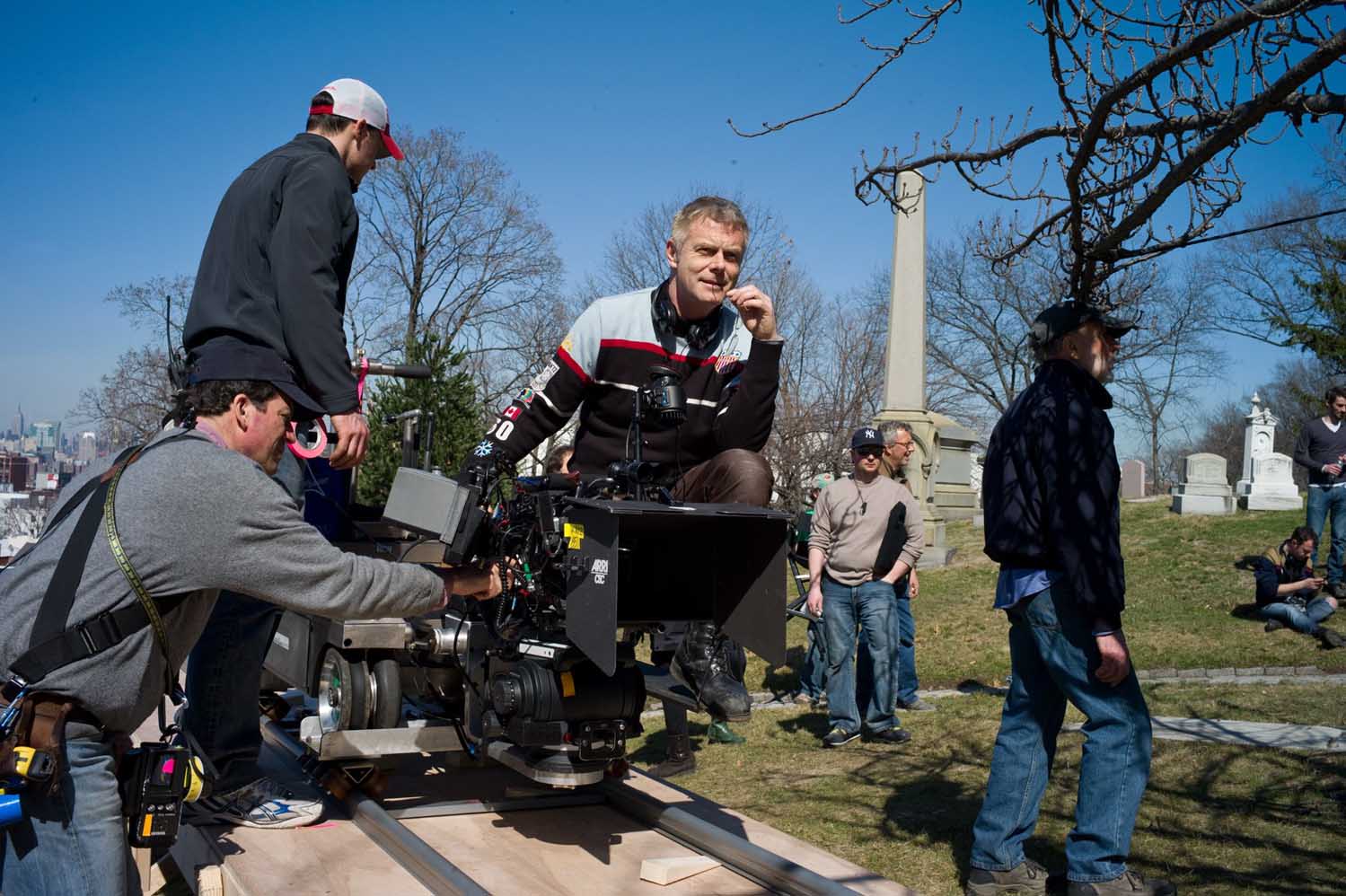
Director Stephen Daldry (center) during the filming of Warner Bros. Pictures' drama Extremely Loud & Incredibly Close. (Photo by François Duhamel. Courtesy of Warner Bros. Pictures).Once he read the book and script for Extremely Loud and Incredibly Close, it was “very simple” for Academy-Award nominated director Stephen Daldry to immediately say yes to directing the film for producer Scott Rudin,who he had worked with on The Hours. The first decision scriptwise was to see the story primarily through the boy Oskar’s point of view, a character with a form of high functioning autism that makes those with the condition experience the world in unusual ways. “We did a lot of work with different folk involved in Asperger’s and how those kids do see the world,” explains Daldry. “It’s about the nature of touch and smell. What they would be wearing; what they would not be wearing – different fabrics. And things they would hear, the audio world of it. The depth of field, the whole idea of what is in focus and what’s not in focus. All those notions that are in the film came from our work – and not just my research, but the research of Chris Menges, Ann Roth and Claire Simpson – rooted in the world of an autistic child.”
Daldry decided to work with Oscar-winning cinematographer Chris Menges (The Mission, The Killing Fields) not only because he was a master at his craft, but also because they had developed shared shorthand from their collaboration on The Reader. “He is a genius at knowing where the story is,” says Daldry. “He is a story cameraman. He focuses entirely on what the narrative is.” The first decision they made about the cinematography was whether to shoot on film or not. The team started doing tests with the new Arri Alexa camera and the raw format. “It was a new format that had not been used in a film before,” says Daldry. “We did a lot of testing about what it could and couldn’t do, about what the limitations and the possibilities were. In the end, Chris was convinced, and indeed excited about exploring the world with this new camera.”
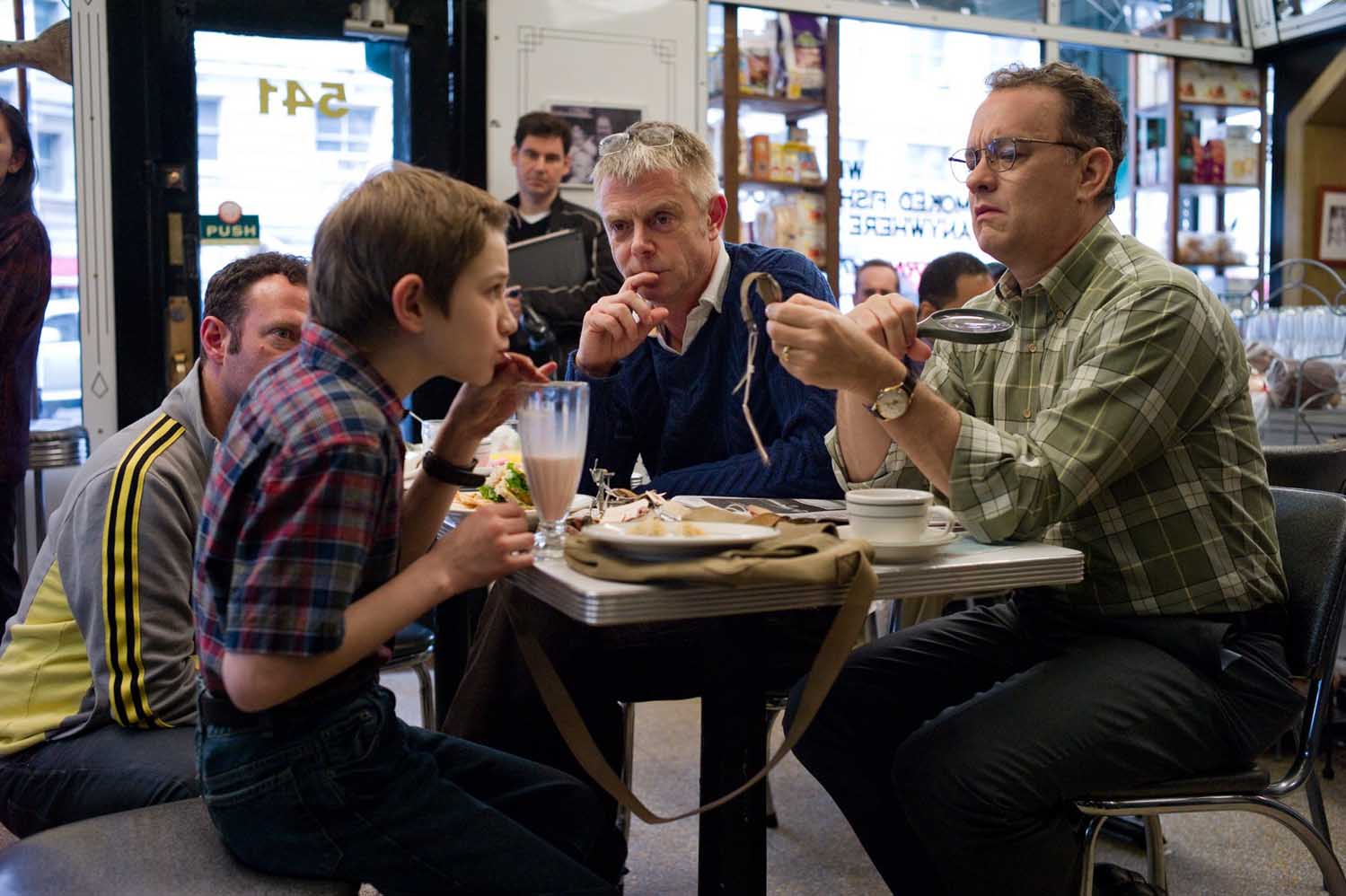
From left: Thomas Horn, Stephen Daldry and Tom Hanks during the filming of Warner Bros. Pictures' drama Extremely Loud & Incredibly Close. (Photo by François Duhamel. Courtesy of Warner Bros. Pictures).Ultimately the camera gave a lot of opportunities, not only in post, but also allowed for extended takes in production which the director thought would be useful working with a young actor. In addition, the density of saturation possible with the camera gave the filmmakers the latitude to alter the look of the film to emphasis how the child sees the world at important story points. “We wanted to have this feeling of how you represent the ‘worst day’ – the child calls 9/11 the worst day – using a saturated world,” says Daldry. “We originally thought about using IMAX. The only reason we didn’t was because it was going to be too loud, too noisy. Alexa raw gave us a vivid image that pulls you so close to the characters’ faces, and to the definition within the face, combined with the opportunities for saturation, plus all the other advantages of the camera. I loved it. I thought it was very successful for us.”
Ann Roth (The English Patient) designed costumes for two of Daldry’s films, The Hours and The Reader so there was a total trust and admiration in the collaboration. “To describe Ann Roth as a costume designer is not accurate,” comments Daldry. “She works really as your script supervisor, your producer and a co-director. She is one of the greats of all time, but she is more than that. She is a proper partner.” The Oscar-winning designer knew a number of autistic children, so she had a clear vision of the specific idiosyncratic nature of how the child would dress. She worked long and hard with the young actor to find a whole world for Oskar.
As with his other key crew, Daldry had also worked with Claire Simpson (Platoon) on The Reader. “Claire cuts totally in tune, totally emotionally. I’m the more conservation of the two of us in terms of worrying about things like space, time logic, all those things. Claire will just follow her instincts. She is a genius at it,” shares Daldry. “I tend to be the worrying about how they got from there to there. She just won’t care. The emotional logic is the logic we have got to pursue here.” Due to the limitations of working with a child actor, such as schooling and shorter hours on set, the shooting schedule was complicated. The production shot for seven months, a very long period. That shortened the post production time down to five months.
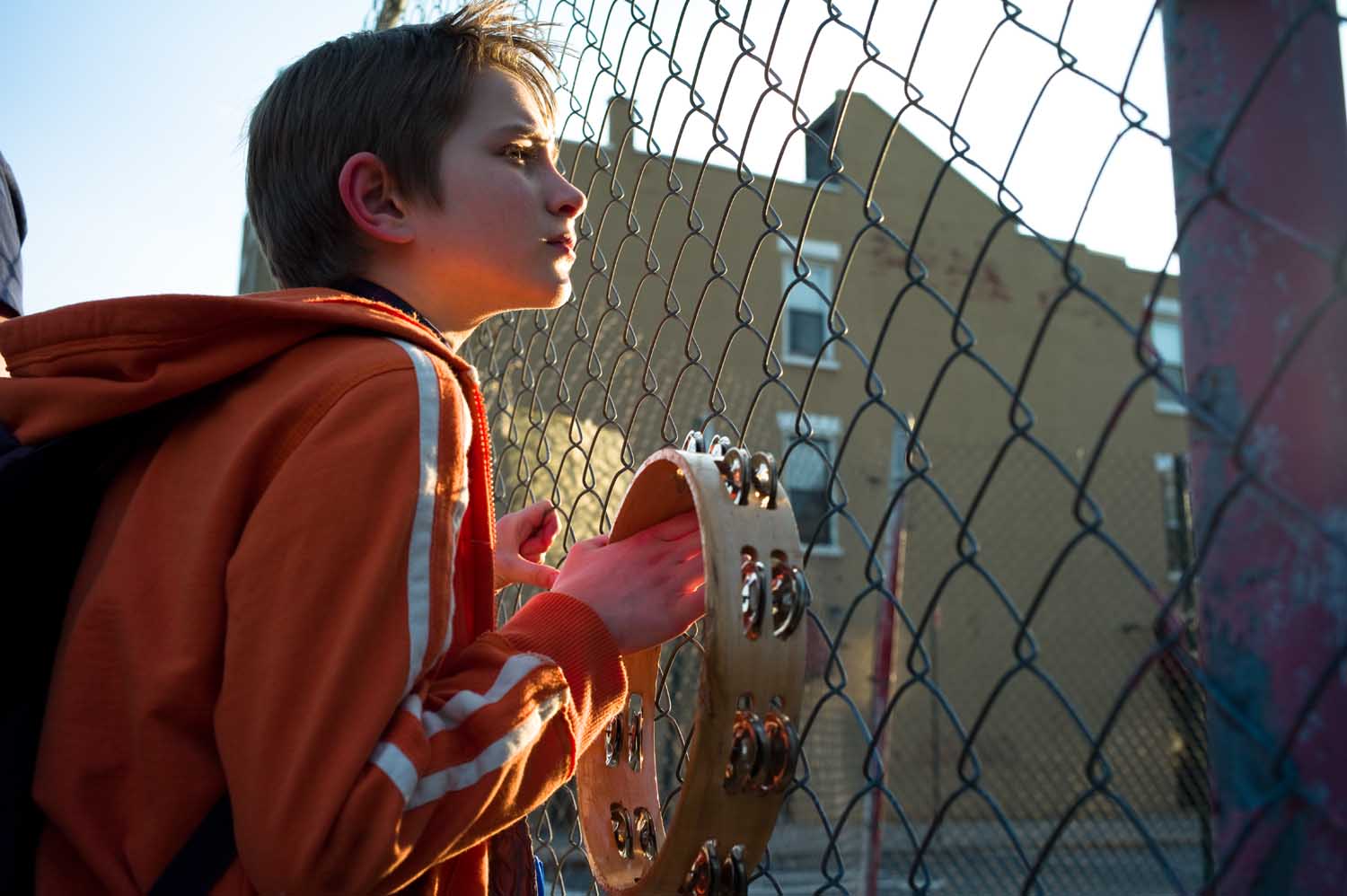
Thomas Horn in Warner Bros. Pictures' drama Extremely Loud & Incredibly Close. (Photo by François Duhamel).On a quest to find the meaning of a key he found after his father’s death, Oskar journeys out of his own secure world into different neighborhoods in the New York area trying to find the key’s owner in hopes of unraveling a secret message from his deceased parent. Creating the disparate worlds where each of the diverse characters lived was the job of production designer K.K. Barrett.Except for the apartment, which was built, all the scenes were shot at different locations and most were used for only one scene. For the production designer, it was a monumental task that continued throughout the course of production. “We never stopped looking,” explains Daldry. “It was a five-day shoot because of the child labor laws, so every Saturday we would carry on searching. It just never stopped. The best thing about K.K., apart from being a brilliant production designer, is that he has bountiful tenacity. When you want to keep going, and keep looking, and keep searching, K.K. was always there. He never gave up.” Although the film came from a book, the vision for the various settings came entirely from Barrett, Roth, Daldry and location manager, Joe Guest (aided by a number of location scouts). “We’d try to figure out what the different worlds of New York might be,” reveals Daldry.”I tried to look at things as if from anew. It’s that old John Schlessinger idea that seeing the outsider’s view of the city is sometimes more interesting than the insider’s view.” Line producer, Celia D. Costas, who had been a location manager, also pushed to find certain areas, nooks and crannies that hadn’t been shot a lot – such as the seaside Rockaways in Queens – that were unique as opposed to generic.
Daldry always knew they would be doing a lot of work in post. Skip and Blake started sound design early on to create a soundscape that would mimic the audio world of an autistic child, including what would be loud in the boy’s mind. “As we were shooting we knew there were landscapes that we would use,” explains Daldry. “What was loud depended upon how fast his brain was working and the speed at which he would talk – whether he would actually hear himself or whether he would be ahead of himself. All these issues were heavily tested in pre-production.”
Working with a child actor was one on the major challenges on the film. Daldry drew upon a team of people that he worked with on Broadway and in London to help him with Thomas Horn who played Oskar. “We have a team that is quite experienced working, educating and training and preparing young performers for the rigors of acting. The group is very well-versed in how to approach this,” shares Daldry. “William Konica was the dialog supervisor. He has always worked incredibly close with me in movies, but mostly in the theater.”
“I think all of our biggest achievements is creating one of the greatest screen performances by a young performer ever,” reveals Daldry. “I think the whole crew looked after him and he looked after us. He really stepped up to the plate and was genuinely astonishing. There was a level of profound respect for what Thomas was doing that people shared, supported and created the environment in which somebody of a young age could do what I think is an extraordinary performance.”